
 Image 1 of 1
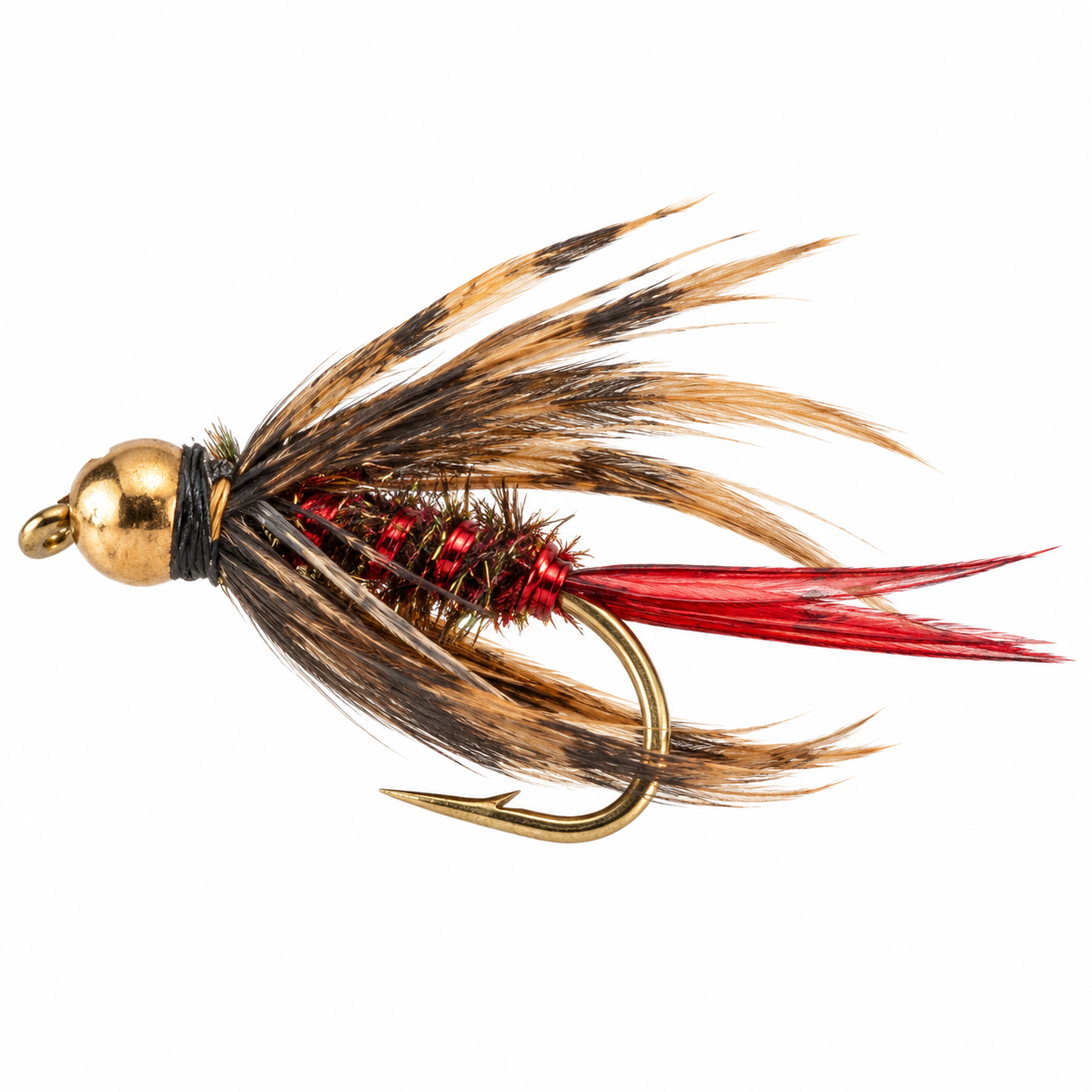
The Bloody Mary is a stout, attractor-style fly known for its bulbous red body, contrasting peacock herl or dark thorax, and sparse hackle that gives it a lively, pulsing profile in the water; originally designed as a stillwater and lake nymph, it excels when fished on a slow retrieve or dead-drifted beneath a strike indicator, provoking takes from trout, bass, and panfish with its vivid color and subtle movement. Its simple, durable construction—often featuring a chenille or dubbed body, a lead or tungsten bead for quick sink, and a few turns of soft hen or partridge—makes it a reliable go-to for anglers targeting fish in murky conditions or low-light periods. The Bloody Mary’s visibility and silhouette imitate leech, egg, or small baitfish presentations depending on size and color variations, and tiers often experiment with flash, rubber legs, or heavier beads to adapt it for deeper or faster water. Whether used as a point fly in a tandem rig or as a single attractor on a dropper, it remains an effective, easy-to-fish pattern that rewards anglers with consistent strikes.
The Bloody Mary is a stout, attractor-style fly known for its bulbous red body, contrasting peacock herl or dark thorax, and sparse hackle that gives it a lively, pulsing profile in the water; originally designed as a stillwater and lake nymph, it excels when fished on a slow retrieve or dead-drifted beneath a strike indicator, provoking takes from trout, bass, and panfish with its vivid color and subtle movement. Its simple, durable construction—often featuring a chenille or dubbed body, a lead or tungsten bead for quick sink, and a few turns of soft hen or partridge—makes it a reliable go-to for anglers targeting fish in murky conditions or low-light periods. The Bloody Mary’s visibility and silhouette imitate leech, egg, or small baitfish presentations depending on size and color variations, and tiers often experiment with flash, rubber legs, or heavier beads to adapt it for deeper or faster water. Whether used as a point fly in a tandem rig or as a single attractor on a dropper, it remains an effective, easy-to-fish pattern that rewards anglers with consistent strikes.