
 Image 1 of 1
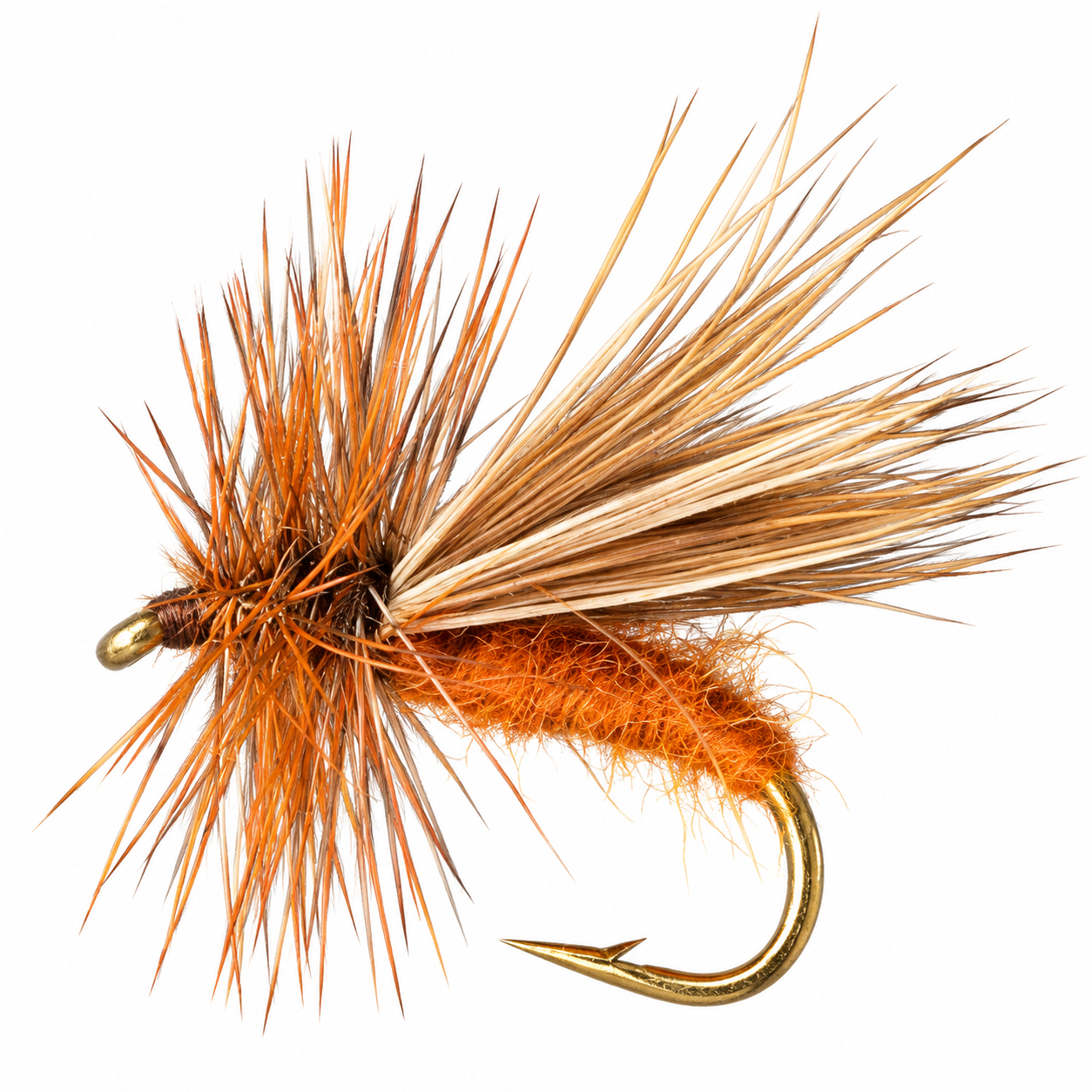
The October Caddis is a late-season aquatic insect that becomes a key food source for trout as water temperatures cool and other hatches wane; adults are typically small to medium-sized with mottled brown to olive wings and a slow, fluttering emergence that concentrates along stream banks and riffles, while submerged larvae and pupae inhabit tufa, gravel, or detritus and provide an easy meal for fish holding near structure. Anglers targeting October Caddis should watch for rising trout in low, clear water during warm afternoons, employ soft-hackle or emerger patterns in tan, brown, or olive, and fish them near the surface film or just below it to imitate struggling emergers. Matching size and profile—usually sizes 14–20—and presenting a subtle, low-drag drift will often provoke takes from otherwise picky fish, making the October Caddis a dependable late-autumn pattern in many river systems.
The October Caddis is a late-season aquatic insect that becomes a key food source for trout as water temperatures cool and other hatches wane; adults are typically small to medium-sized with mottled brown to olive wings and a slow, fluttering emergence that concentrates along stream banks and riffles, while submerged larvae and pupae inhabit tufa, gravel, or detritus and provide an easy meal for fish holding near structure. Anglers targeting October Caddis should watch for rising trout in low, clear water during warm afternoons, employ soft-hackle or emerger patterns in tan, brown, or olive, and fish them near the surface film or just below it to imitate struggling emergers. Matching size and profile—usually sizes 14–20—and presenting a subtle, low-drag drift will often provoke takes from otherwise picky fish, making the October Caddis a dependable late-autumn pattern in many river systems.